

Open in browser
Subscribe now
Science versus Scientism (part 2)Continued root cause analysis of the COVIDcrisis
Robert W Malone MD, MS
Jun 7
Now that Scientism has been defined, and the specific example of Dr. Anthony Fauci and the context and truth of his claim that “attacks on me, quite frankly, are attacks on science” has been examined, lets turn to examining what is “Science”, at least that version of “Science” that I have been taught and practiced for over forty years.
Merriam-Webster: science (noun) sci·ence | \ ˈsī-ən(t)s \
Definition of science
1a: knowledge or a system of knowledge covering general truths or the operation of general laws especially as obtained and tested through scientific method
b: such knowledge or such a system of knowledge concerned with the physical world and its phenomena : NATURAL SCIENCE
2a: a department of systematized knowledge as an object of study: the science of theology
b: something (such as a sport or technique) that may be studied or learned like systematized knowledge: have it down to a science
3: a system or method reconciling practical ends with scientific laws: cooking is both a science and an art
4capitalized : CHRISTIAN SCIENCE
5: the state of knowing : knowledge as distinguished from ignorance or misunderstanding
Personally, I prefer the point of view nicely summarized by Steve Savage
“Science is a verb.”
In an allusion to the John Mayer song, “Love Is A Verb,” Dr. Cami Ryan noted that as with the word “Love,” “Science” is a legitimate noun. But in both cases, it is the action, the process, and the effort – the verb – that really matters.
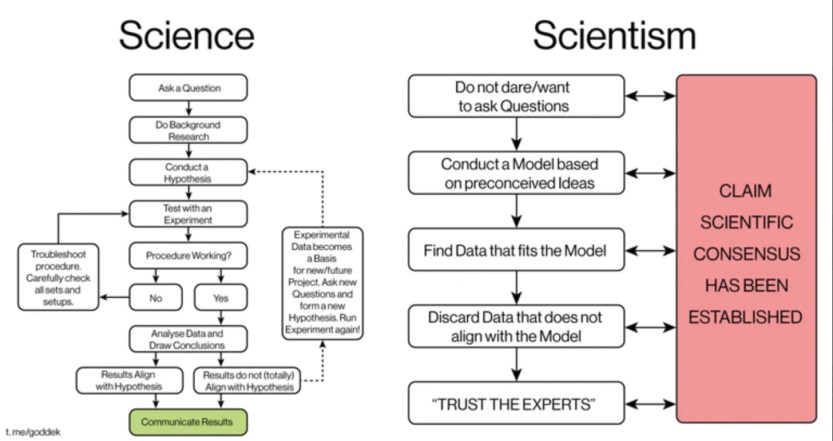
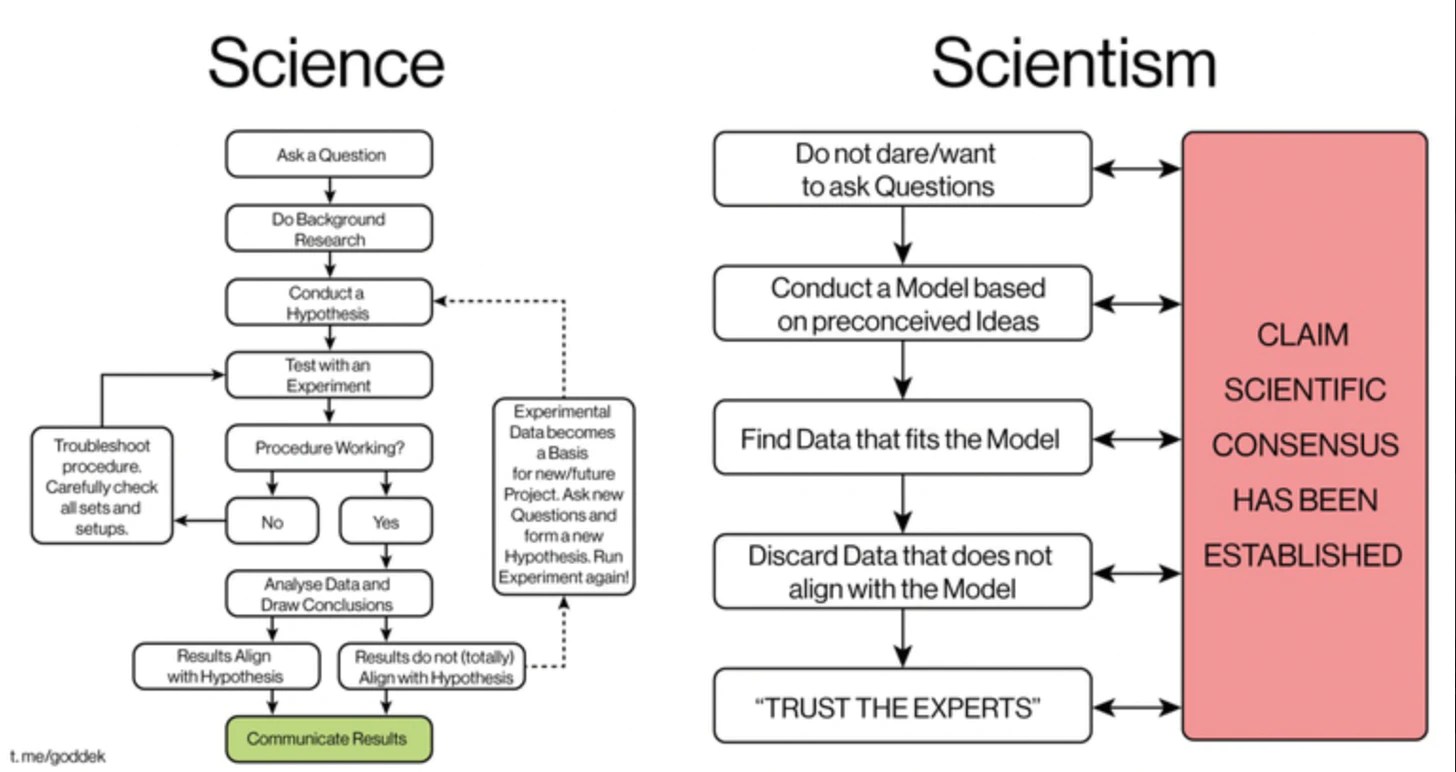
Science is a verb in the sense that it is a method (activity) involving the making of hypotheses, the design of experiments and the analysis of data. But a critical part of the scientific process is the conversation phase after the experimentation is done. Scientists share their findings with the broader community through publications or presentations at meetings. What happens next is a back-and-forth discussion including a critique of methods or interpretation, and a comparison with previous findings.
If there are flaws in the experimental design or interpretation, other scientists will point that out. To participate in the conversation, scientists need to be willing to hear and respond to feedback. If there are conflicting results, it may require additional hypothesis making and experimentation. Only when the conversation runs its course do the conclusions become a part of accepted scientific understanding.
A bit of personal background would probably be helpful here, as I suspect that my idiosyncratic sense of what is “Science” is probably quite different from what is taught in today’s textbooks. The mentor that really taught me the process of “doing science” (ergo, the verb) was basically a scientific ascetic, in that he was quite austere in manner, habits, and practice. Both an MD and a PhD, he was a practicing board certified Pathologist who was focused on breast cancer research, with training at the Armed Forces Institute of Pathology back when that really meant something. I was just a Junior in college who thought that maybe I could get into Medical school (but not likely), but if not then becoming a bench scientist in the areas of Virology and Molecular Biology might be a pretty good fall back plan. I do not know why he took me in, but he did, and I worked at the bench in his laboratory every minute I could spare for two solid years.
Talk about a harsh taskmaster. Every week, during the group lab meeting, it was stand and deliver. What is the positive control, what is the negative control, what is the hypothesis, what are the findings, alternative findings, and what are the limitations. Week after week after week, surrounded by mature scientists, physicians, graduate students and lab technicians who were all much more experienced than I was. He still lives in my brain, and when I click into analytical scientist mode I have to restrain my inner asshole lest I end up unintentionally tearing an extra one for whomever I am interacting with. I have to be particularly careful when reviewing manuscripts, grants or contracts, lest I end up a scientific nihilist – nothing ever good enough. But from him I learned how to do rigorous scientific investigations, how to think about experimental design, how to interpret data, and how to punch holes in almost any research paper. That is my origin story as a scientist.
My mentor was particularly attuned to the nuances of scientific bias, and how that can so easily compromise scientific research and interpretation. For all my remaining years I will recall his admonition to avoid building hypotheses on sand rather than firm rock, just as I will never forget his looking me in the eye and telling me that he had no time for false modesty.
There were two key papers at the core of his teaching concerning the scientific method. The first is titled “Strong Inference: Certain systematic methods of scientific thinking may produce much more rapid progress than others” [Platt, J. R. (1964). Strong inference. Science, 146(3642), 347–353]. Strong inference is possible when results from an experimental paradigm are not merely consistent with a hypothesis, but they provide decisive evidence for one particular hypothesis compared to competing hypotheses. The second is titled “The Method of Multiple Working Hypotheses”, and basically describes a method for avoiding bias associated with a single hypothesis to which one may become overly attached. This method requires devising as many competing alternative hypotheses as possible and then designing experiments that differentiate between the alternatives. First published in 1890 in the journal “Science”, it was then republished in the same magazine in 1965 as “The Method of Multiple Working Hypotheses: With this method the dangers of parental affection for a favorite theory can be circumvented” [Chamberlin, T.C. (1965) Science, 148(3671), 754-759]. All of the above is grounded in a profound respect for how complicated biological systems are. Humility in the face of our ignorance, not hubris concerning all that a given scientist may know (or think he/she knows). At this point, I think you can probably make out the trend in scientific processes which I subscribe to.
State the problem (or hypothesis) that you wish to clarify or resolve. This can be the most difficult part- in my experience, once you can clearly and cleanly state a problem, then it gets a lot easier to solve it.
Come up with as many alternative hypotheses to explain the phenomenon (or problem) as you can.
Discuss the alternative hypotheses with others (particularly others that are not invested in the dominant explanation) and try to get them to help you to see additional alternative explanations. Getting input from “outsiders” can be particularly useful at this point. More on that later.
Design experiments which can reject the various alternative explanations. Sometimes this will require multiple experiments.
Perform the experiments and record the data. Always include rigorous positive and negative control experiments performed at the same time (“controls”). Optimally, a “strong inference”-type definitive study will provide a result demonstrating that one of the hypotheses are clearly correct and the others can be rejected. However, often a well designed and interpreted experiment may raise more questions than it resolves.
Repeat step 5 to confirm, and perhaps reconsider step 4 prior to repeating step 5.
Continue process until a definitive result concerning the original question is obtained.
From the above, even without detailed knowledge of clinical trial design, good clinical practices, or knowledge of regulatory affairs, it is clear that what was performed with the various vaccine clinical trials was not really scientifically sound research. Let alone the decision making process concerning mask usage. These were examples of Scientism in practice. Scientism applied to the entire global population. So there is that.
Then we get into the epistemology of all of this. “Epistemology seeks to understand one or another kind of cognitive success (or, correspondingly, cognitive failure)”. What is actually known or proven? What is knowable or provable? Personally, for the sake of trying to make sense out of things, I like to divide the world up into three domains: the known, the knowable unknown, and the unknowable. I believe that there is objective reality, an approximation of “truth”, within the realms of the known and the knowable unknown. In my belief system concerning the “doing” of science, it is the job of the scientist to master knowledge of as much of the known as possible, and then to venture into the knowable unknown for the purpose of capturing and bringing fragments of that world into the domain of the known. Good scientists are (by nature, training and practice) like pioneers or traders that move between the realms of known and knowable unknown. Upon bringing back some fragment of what they believe to be truth, they then subject each other to a form of “intellectual torture by criticism” when seeking to correctly interpret that fragment which has been brought back into the realm of the known.
In contrast to those who practice science, I believe it is the job of philosophers and those who focus on the spiritual realm to provide some structure to the unknowable. To help us to come to terms with mysterious aspects of the unknowable (such as what happens after death, or the existence of a higher power or purpose) so that we can come to terms with the mysteries which resist measurement and quantitation. This is in no way to say that these mysteries do not exist, or that God does not exist, or that there is no form of consciousness after death. As far as I am concerned, the answers to these eternal questions are matters of faith, not of science. Personally, I am convinced that there is something deeply mysterious and wonderful about sentient beings including ourselves. An emergent property which defies rational explanation, and cannot be quantified on some utilitarian or economists spreadsheet. As a scientist, my sense is that this is not something that can be reduced to the domain of the known, as it defies measurement – at least at this point in time. In my internal model of the world, this emergent property of sentient beings, the basis for this luminous transcendent wonder which we often call the soul, resides in the realm of the unknowable unknown. It seems to live in the realm of the unconscious, not in the analytical conscious mind. And since it cannot be measured or quantitated, it defies utilitarian optimization.
To my mind, this is a key reason why the infamous World Economic Forum statement that “You will own nothing, and you will be happy” rings so hollow. Such statements emerge from the profound hubris of those who believe that they can engineer happiness on a global scale. “Happiness” is something which emerges from the individual soul, and not something which can be algorithmically optimized. Historically, every time this has been attempted, the result has been destruction of mind, initiative, and soul on a massive scale. In my opinion, the key human parameter which the philosophical systems of Utilitarianism and Marxism miss is often referred to as “agency” or individualism, the concept whereby people act as individual members of the society, which also relates to the political terms “libertarianism”, “classical liberalism”, and “freedom” as the word was employed during the American enlightenment. Individualism represents a cultural opposite to collectivism.
With this structure in mind, I suggest we venture into key aspects and limitations of the “doing” part of science. The process of Science, in other words science as a verb, is intrinsically incremental and fundamentally conservative (in the classic sense of the word, not the modern political sense). Knowledge progresses in small steps, much like biological evolution. A modification is made, a theory or hypothesis is designed and tests are developed, data are collected, and results are interpreted/discussed/challenged, and then the whole process begins again. Often experiments raise new questions, resulting in a seemingly endless loop of test/analyze/interpret, retest. Step by step, true knowledge builds. On rock, not on sand. Completely opposite of the surety and hubris of those who practice Scientism.
Human beings performing this process of science all share inherent cognitive flaws which will always introduce bias at all stages of the process. The structural outline of these flaws are revealed by the study of human thought, of the process of cognition. The core problem is that our conscious mind does not directly perceive reality. We receive sensory input from the world, but filter that signal based on the very personal internal models of reality which we have built up since birth. These models are the product of both our (internal) personal experiences as well as (external) models which we have assimilated through interactions with others (parents, teachers, mentors, etc.). Having built these internal models of reality through both personal trial and error as well as external interactions, humans generally use a form of abstract mental tokens which we call “words” and “language” to process and integrate these models – a process that we call conscious thought (as opposed to unconscious information processing).
In sum, this process of human conscious thought gives rise to three key problems. The first problem is that words and language, as abstract representational tokens, carry intrinsic bias. Words are an internal approximation of some intrinsic meaning, and at a deep cognitive level they have no objective meaning- they are representations which always require reference to other (imperfect) words to yield some subjective sense of “truth”. In other words, words and the internal meaning which we assign to them bias our ability to think- to discern an accurate interpretation and meaning of the raw data received from our senses. This is why the manipulation of the meaning of words for propaganda purposes is so insidious. This practice incrementally destroys our ability to accurately comprehend, to think, to make meaning of external reality. Which results in what Dr. Joost Meerloo refers to as menticide, the rape of the mind.
The second problem is even more profound. Cognitive psychology studies, particularly involving the strange process of hypnosis (which lies at the heart of the mass formation process), clearly demonstrate that the human mind will reject sensory data which are inconsistent with our internal models of reality. In other words, if our internal models (which can be considered as “paradigms”) are inconsistent with some external reality which our senses perceive, we will typically reject the true objective reality and force the incoming sensory data to fit within our internal cognitive models. For more on this paradox, I recommend a few video clips which you can stream:
Cognitive scientist Dr. Donald Hoffman: Do we see reality as it is?
Neuroscientist Dr. Anil Seth: Your brain hallucinates your conscious reality
Willson Professor and Associate chair of Psychiatry and Behavioral Sciences at Stanford University School of Medicine Dr. David Spiegel: Tranceformation – Hypnosis in Brain and Body
And then there is the third underlying problem of the nature of the internal models of reality which we all hold and use to interpret the raw data which we receive from our senses, another word for which is “paradigms”. Since the time of Aristotle the field of “Science” (both the noun and the verb) has expanded to encompass such a vast scope of knowledge and inquiry that it has become necessary to parse all of this into subsets and increasingly finer divisions which are often referred to as scientific disciplines. This is also true for other fields of human thought, practice (for example, the trades) and philosophy. Each of these have then developed their own paradigms and models of reality, acceptance of which (or reaction to which) basically defines the community of practitioners of that discipline. Those who fail to meet a minimal level of acceptance of the paradigms which define a scientific discipline are typically rejected by other members; they are heretics.
Paradigms can be viewed as models which provide benefit or utility for solving the problems which the practitioners of a scientific discipline encounter. But all paradigms have limits of usefulness, because they do not represent reality itself, but rather are merely learned models used to help make sense out of the perceived data stream which is true reality. Because of the various forms of cognitive bias discussed above, as a scientific discipline approaches the edges of the accuracy or usefulness of a model to interpret reality, practitioners face an increasingly difficult task when trying to solve problems at those boundaries. As a consequence, these “mature” scientific disciplines face two choices: they either must modify the model or jettison it for a new model, or they must force the reality to conform to the model and avoid those problems which do not fit within the model.
Practitioners who seek to modify or jettison the model(s) that define a scientific discipline for a new models which are more able to fit data which are outside of the current model are typically labeled heretics and rejected by the “tribe” of “true” practitioners. One common example of this type of reasoning is known as the logic error known as “no true Scotsman”, and we have seen quite a bit of this going on during the COVIDcrisis. For example- Statement: “All vaccinologists agree that the COVID genetic vaccines are safe and effective”. Counterpoint: “I am a vaccinologist and I do not think that these genetic vaccines are safe and effective”. Response: “Therefore, you are not a true vaccinologist”. Within scientific disciplines which are blocked at the stage where they are reaching the limits of usefulness for problem solving and sensemaking, this faulty logic typically exists in parallel with the rise of a sort of scientific priesthood that primarily acts to defend the models or paradigms which have come to define the discipline. These are the practitioners and “priests” of Scientism, who basically act to reinforce and defend what they believe to be established (or revealed) truth.
Just like biological evolution, sometimes there are bursts of innovation, insight and eventually knowledge. Thomas Kuhn was one of the first to look rigorously at science, discovery, innovation and knowledge development, and detailed his findings in his classic work “The Structure of Scientific Revolutions” (1996). He largely introduced the concepts and terms “paradigm” and “paradigm shift” into the epistemology of “science”, and his scholarship and teaching form the last main pole in the tent of my understanding of the practice of science (as a verb).
Kuhn was perplexed by why abrupt shifts occur in scientific knowledge; what are the conditions and causes for the changes in scientific thought which trigger these bursts of innovation, insight and knowledge. Examples of such include the insights and eventual acceptance that the earth is round and revolves around the sun (which allowed much more effective problem solving in the critical domain of navigation, among other things), and of course solution of the double helix structure of DNA (which allowed rapid solution of many problems in biology and genetics in particular). These breakthroughs in thought, which then lead to explosions of both scientific insight as well as greatly enhanced problem solving capabilities, were each associated with heretical models that were inconsistent with the established “truths” jealously held by scientists of the day. Among many other insights, Kuhn realized that these breakthroughs often come from outsiders or newcomers rather than practitioners of a scientific discipline. In large part, this can be explained by the process of learning and accepting the dominant models which define a scientific discipline. The very act of assimilating the model and striving to join the guild of practitioners constrains the ability to see the limitations of the model, and increases the risk that practitioners will “force the data to fit the model”.
Which is why (in my opinion), if we wish to better perceive “truth” and reality, and to solve the difficult problems which resist application of our current knowledge and belief systems, outsiders and heretics are essential. Based on the teaching of Kuhn, in my own laboratory work, I always seek out and actively listen to the newcomers. They may not know the language of insiders, and may not know the current models, but they are often the only ones that can see parts of scientific reality which insiders cannot perceive, because their minds are constrained by the models of reality which they have assimilated during the process of indoctrination required to become expert members of the scientific guild which they practice. But these rare insights which frequently arise from outsiders are often not the product of “logical” thought, but seem to often arise from some part of the human brain which is outside of the conscious mind, and strangely often seem to arise somewhat independently in multiple places at about the same time. As far as I am concerned, that is one of the great mysteries and wonders of our shared humanity, and a key argument in favor of personal agency, of freedom.
Because in cultures dominated by the concepts of utilitarian collectivism and Marxism, there seems to be little room for heresy, insight, innovation, and the paradigm shifts which are the hallmark of true science – as opposed to scientism.
LikeCommentShare
You’re a free subscriber to Who is Robert Malone. For the full experience, become a paid subscriber.
Subscribe
© 2022 Robert W Malone, MD
Virginia
Unsubscribe
https://rwmalonemd.substack.com/p/science-versus-scientism-part-2?s=r
 DEEP STATE WATCHDAWGS™©® NEWS & MEDIA SHARING GOVERNMENT OVERSIGHT ORGANIZATION
RE “mass formation”
The official framing of this “phenomenon” is misleading and wrong. The false hope-addicted psychologists and their acolytes want you to believe this is “just some temporary occasional” madness by the masses that has been going on for a couple of centuries when it is but a spike of a CHRONIC madness going on for aeons with “civilized” people — read “The 2 Married Pink Elephants In The Historical Room –The Holocaustal Covid-19 Coronavirus Madness: A Sociological Perspective & Historical Assessment Of The Covid “Phenomenon”” …. https://www.rolf-hefti.com/covid-19-coronavirus.html
One of these mainstream psychologists who have been spreading this whitewashed reality, Dr. Desmet, also fails to see that the PLANNED Covid Psyop is a TOTALLY deliberate ploy because he doesn’t think (after more than 1 year, even 2 years, into this total PLANNED scam!) it’s ALL intentionally sinister as he stated in a prior podcast (this makes him witting or unwitting controlled opposition).
In the May of 2022 podcast with James Corbett he stated that “some people tend to overestimate the degree of planning and intentions” (behind the COUNTLESS, VERIFIABLE, FULLY INTENTIONAL, FULLY PLANNED atrocities by the ruling tribe of psychopaths over the last century alone) and see all of it as being planned which Desmet called “an extreme position” … Sound logical thinking is “extreme” and therefore false and sick in his demented delusional view!!!
In his overpriced misleading whitewashing old material regurgitated book the psychology of totalitarianism he too states that “There are countless … examples that seem to point in the direction of a plan being implemented, such as the fact that the definition of ‘pandemic’ was adjusted shortly before the coronavirus crisis; that the definition of ‘herd immunity’ was changed during the crisis, implying that only vaccines can achieve it … [he continuous with several other obvious facts of an ENTIRELY PLANNED event, especially discerned through the totality of all these facts].” “SEEM to point in the direction of a plan”??? No! They most evidently, clearly, and irrefutably DO demonstrate and prove it IS a COMPLETELY AND FULLY DELIBERATE PlanDemic! A big scam. An Entirely Planned Holocaust against the non-ruling herd of people (see cited link above). A coherent 12-year old kid can figure that out.
It clearly shows Desmet’s own complete lunacy. But because almost everyone in the culture is a member of mass formation (madness), including the “woke” people of the alternative media domain, hardly anyone recognizes Desmet’s lunacy. Not surprising that he has even become some type of popular “guru” among the adherents of the alternative media landscape.
With his false use of language Desmet obscures or hides the true reality instead of directly and uncompromising exposing it — aiding the obfuscation of the vital reality of what the ruling authorities really are. He does the same thing when he speaks of ‘the elite’ (as he does in a number of podcasts) when, in reality, they are THE SCUM OF HUMANS because they are REALITY-VERIFIED PSYCHOPATHS (see referenced source above). Yet in the Corbett podcast he “teaches” us that we, the masses, need to start thinking differently. Right… how about YOU start with sane instead of insane thinking/talking/”teaching”/etc, Dr. Desmet?
This all means Desmet is ALSO a member of the masses of lunatics, an ACTIVE CARD-CARRYING MEMBER of mass formation!!! When, if at all, will he wake up from his state of mass psychosis? When, if at all, will he face the TRUE and FULL reality instead of hiding behind fantasies such as his whitewashed “reality” of human civilization?
It shows we live in a global mental asylum with criminal and/or delusional mainstream psychologists, scientists, and docs as the guards, “teachers” and “therapists” … The blind/criminal/mad leading the blind/criminal/mad; the blind/criminal/mad adhere to the blind/criminal/mad = the human madhouse.
Worst of all, perhaps, the mass formation/mass psychosis notion frames the problem as the public being a mere unaccountable non-culpable victim in this phenomenon (the gist of the circular argument is: the masses should change their thinking but they got brainwashed so they’re victims). Nothing could be further from the truth (see referenced source above).
Desmet is right in that truth-activists must fight against mass formation psychosis (human madness). That also means exposing HIS deeply destructive mad part of it. This comment serves, in part, that objective.
LikeLike